
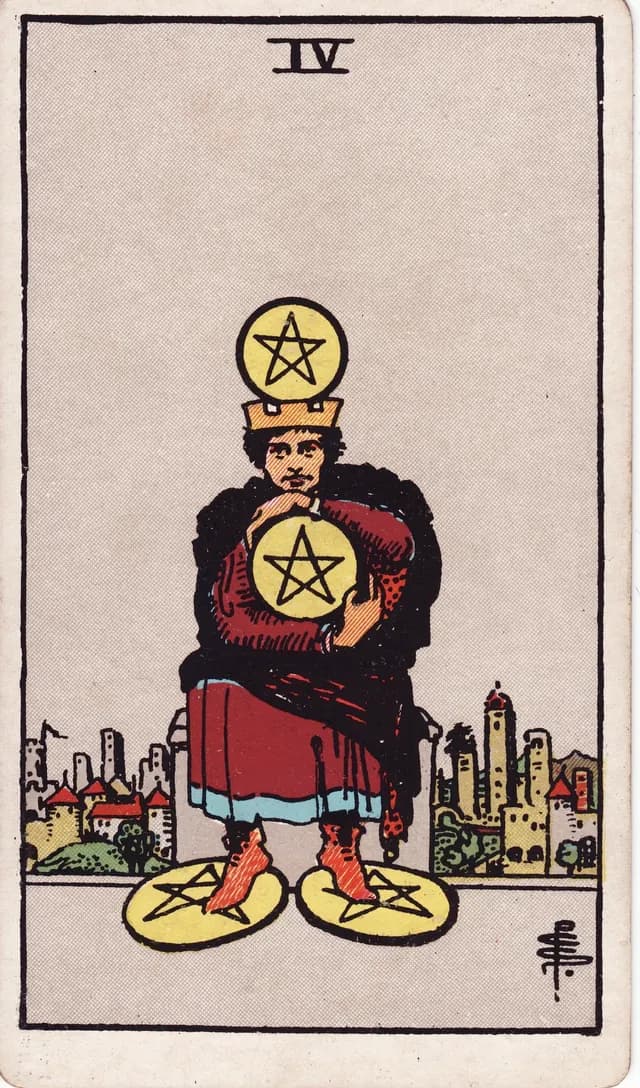
What Four of Pentacles as intentions means
As intentions, the Four of Pentacles suggests a possible plan to preserve an existing arrangement. Someone may prefer familiar terms, limited changes, or keeping control of resources they already manage. Ask which part of your proposal they want to protect and which remains open for discussion. The held coins describe a conserving direction, while explicit choices provide evidence of what the person actually intends.
A person discussing future plans can emphasize keeping things stable without proposing a next step. Their concern might be protecting time, ownership, or a routine that already serves them. Ask how your needs fit that arrangement before assuming stability means a shared commitment to grow. Preserving a familiar routine is a real choice, but it does not promise a new stage of commitment.
Explore Four of Pentacles with your own draw
Your draw can reveal any card in the deck.
In love
In love, this card suggests a possible wish to keep the relationship close and familiar. A partner could favor your established routines while avoiding changes that require more openness. Ask whether the plan includes room for both people to develop their own interests. A plan to stay close must leave both people free to choose how that closeness develops.
At work
A manager's proposal might focus on protecting existing resources before approving a new approach. Ask which limits your project must respect and what information would support a smaller change. Confirm whether the person is considering the proposal or simply restating the current arrangement. A clear decision shows which resources can move, while general caution only describes the person's preferred approach.
Your next step
Ask the person what they want to keep stable and why that part matters. State the change you need without treating all caution as an obstacle to overcome. Look for a limited agreement that protects a real requirement while allowing one useful adjustment. Ask for a defined next step, so protecting the present does not leave every proposed change unanswered.
- protecting resources
- familiar terms
- limited change
- preserving stability
The image behind this reading
You can see the seated figure resting each foot on a separate gold coin.[1]
Read these meanings as modern interpretations of the imagery in your 1909 Rider-Waite-Smith deck.