
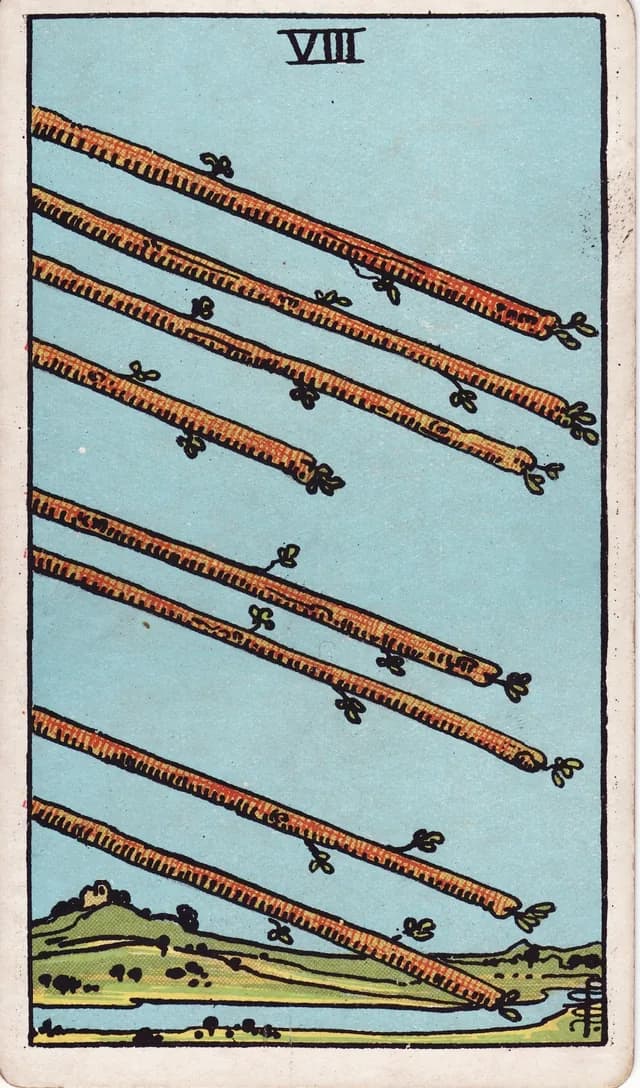
What Eight of Wands yes or no means
Upright: Yes, because your clear next step is ready to move.
Reversed: Leaning no, because your next move lacks a clear signal.
The Eight of Wands upright receives Yes in the current map, favoring movement with clear communication and timing. Apply the answer to a next step that has the information and agreement it actually requires. The flying staffs give your reading an image of effort traveling together in one direction. Readiness depends on clear instructions, so check the details before letting enthusiasm set the pace of your action.
Reversed, the live answer is Leaning no because a mixed signal or delayed detail makes proceeding premature. Ask which message your next action depends on and whether its current version has been confirmed. A brief pause can reveal an error that another fast reply would otherwise carry further. Clear movement has usable information behind it, while a confused handoff needs enough time for correction before proceeding.
Explore Eight of Wands with your own draw
Your draw can reveal any card in the deck.
In love
For love, upright Yes supports a clear invitation or response when both people understand the proposed next step. Confirm your own interest and the other person's agreement before treating lively contact as a completed arrangement. Reversed Leaning no directs attention toward mixed signals or timing that still needs a direct question. Neither answer supplies another person's reply, so leave their choice open until they express it themselves.
At work
At work, upright Yes fits a task ready to advance because the instruction and next responsibility are clear. Check essential details before your team acts on a message that arrived with a strong sense of urgency. Reversed Leaning no asks for verification of delayed or conflicting information before the handoff proceeds. A shared understanding of the next step makes prompt action useful to everyone responsible for completing the task.
Your next step
Ask whether to take one clearly described action with the information currently available to you. Check the recipient, instruction, and timing that the action needs before treating the plan as ready. Use upright Yes to consider proceeding when those details are confirmed and participation remains agreed. With reversed Leaning no, resolve the missing signal before committing to the action that depends on it.
- upright yes
- reversed leaning no
- clear timing
- ready movement
The image behind this reading
You can see the curved river below the staffs crossing above the low green landscape.[1]
Read these meanings as modern interpretations of the imagery in your 1909 Rider-Waite-Smith deck.