
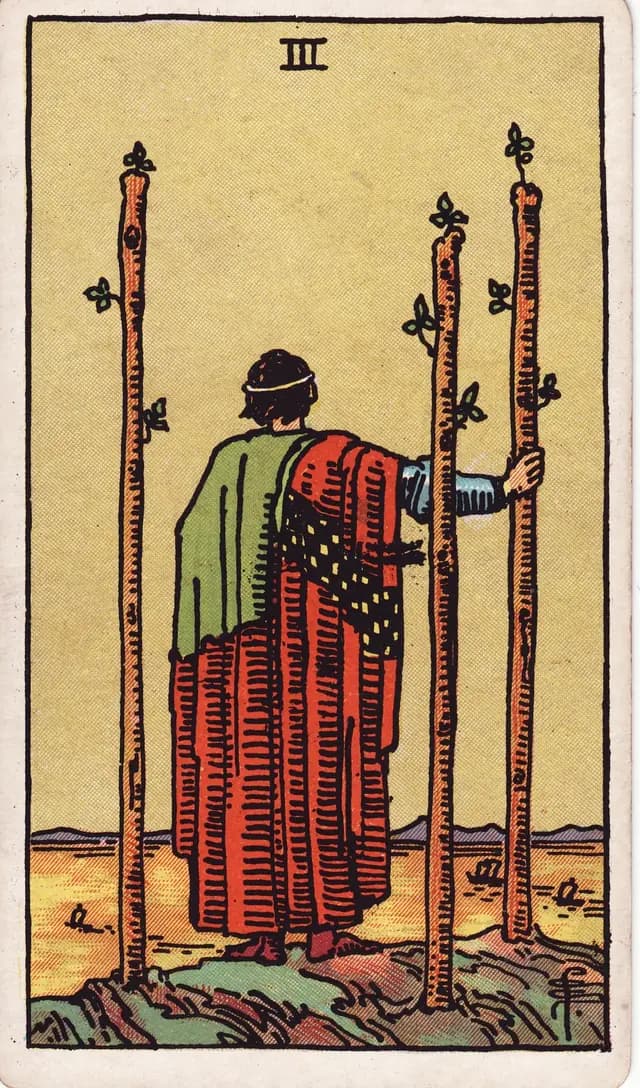
What Three of Wands yes or no means
Upright: Leaning yes, because your early effort is showing useful progress.
Reversed: Maybe, because your plans need more time to show results.
The Three of Wands upright receives Leaning yes in Naksham's current map, favoring growth from effort already underway. Use this answer for a step supported by evidence rather than a return you only hope to receive. The figure looking across the water gives your reading an image of attending to an outward process. Confirm the progress that makes further investment of time or effort a reasonable next step to consider.
Reversed, the current answer is Maybe because delayed results leave the next stage less clear than expected. Check confirmed results and pending responses before deciding whether your plan needs patience or a change. Request an update from the relevant person instead of treating every delay as a refusal or reassurance. The two labels preserve the difference between supported outward movement and a return still needing closer attention.
Explore Three of Wands with your own draw
Your draw can reveal any card in the deck.
In love
For love, upright Leaning yes supports a next shared step when the bond already shows reciprocal effort. Ask whether your companion wants that particular step and how it fits the pace both people can maintain. Reversed Maybe calls attention to delayed plans or expectations that have moved ahead of the relationship's present capacity. Confirm the available commitment before making arrangements that assume the next stage has already been chosen together.
At work
At work, upright Leaning yes suits following useful early results with a measured next phase of activity. Review your current evidence, including completed work and confirmed interest, before promising that a wider project will succeed. Reversed Maybe asks for clearer status on delayed responses or a schedule that no longer fits actual capacity. Adjust the plan from those facts, letting the answer inform your decision while responsibility remains with you.
Your next step
Phrase your question around continuing one existing effort rather than predicting every result from a much larger plan. List the progress already confirmed and the remaining dependency that could change your next practical step. Use upright Leaning yes to consider a measured extension, keeping the commitment close to what the evidence supports. For reversed Maybe, confirm updated timing before agreeing to another stage that depends on the delayed result.
- upright leaning yes
- reversed maybe
- measured growth
- confirmed progress
The image behind this reading
You can follow the layered garments down the figure's back toward the uneven rocky ground.[1]
Read these meanings as modern interpretations of the imagery in your 1909 Rider-Waite-Smith deck.