
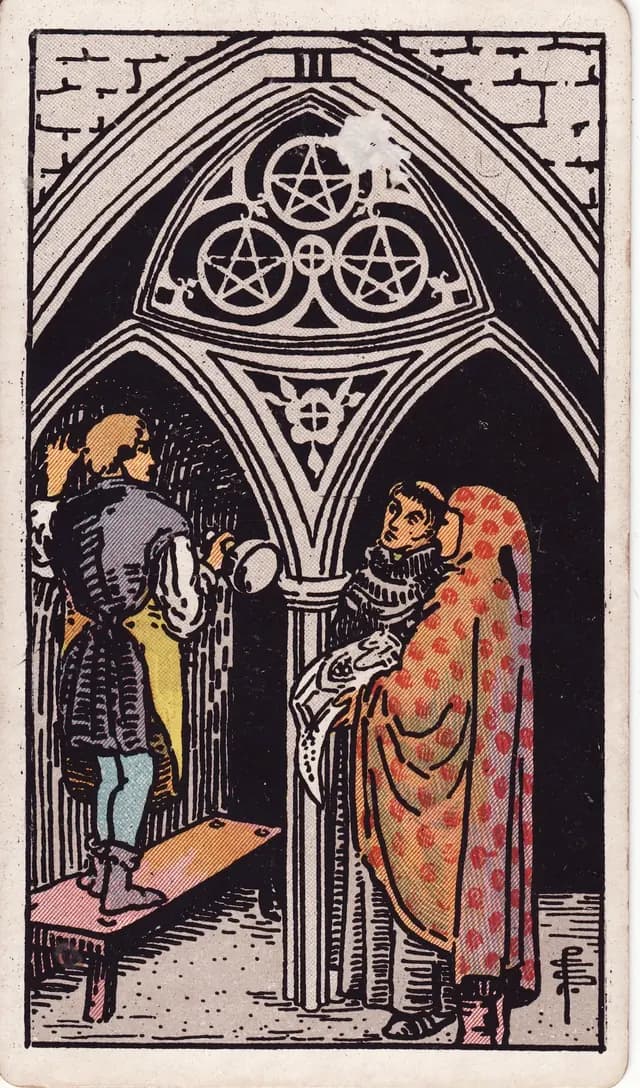
What Three of Pentacles as a person means
As a person, the Three of Pentacles describes someone who values craft and works well with others. This pattern appears when you prepare carefully, seek feedback, and respect another person's skill. The building scene links competence with cooperation, rather than treating talent as a reason to stand apart. Read it as a way of working that can grow through practice and honest shared review.
A capable teammate does more than finish their own piece before the deadline arrives. They ask how your part connects and flag a mismatch while there is time to adjust. That collaborative strength needs a boundary when seeking agreement delays every small decision unnecessarily. Notice whether the person can accept guidance while still taking responsibility for the judgment their own role requires.
Explore Three of Pentacles with your own draw
Your draw can reveal any card in the deck.
In love
In relationships, this pattern shows through a willingness to build routines that serve both people. A partner who asks for your view before changing shared plans makes cooperation visible. Value that practical teamwork while leaving room for affection that has no task attached. Leave one evening free of planning, so teamwork does not consume every chance to enjoy being together.
At work
At work, this person often contributes a clear skill while respecting the expertise of teammates. They can explain their choices and ask for your review without treating questions as personal attacks. Match responsibilities to real strengths and provide enough information for everyone to see the larger project. The Three's skilled collaborator works best where quality is shared and credit reflects the contributions people actually make.
Your next step
Choose one piece of work that would benefit from another person's informed and practical feedback. Explain the result you want, then ask a focused question about the part still needing improvement. Apply the useful suggestion and acknowledge the contribution when you share the finished result. Practicing this Three means keeping your craft open to others while remaining responsible for the work you deliver.
- skilled teammate
- shared credit
- open feedback
- careful craft
The image behind this reading
You can see a patterned cloak beside the plan beneath the three pentacles in the arch.[1]
Read these meanings as modern interpretations of the imagery in your 1909 Rider-Waite-Smith deck.