
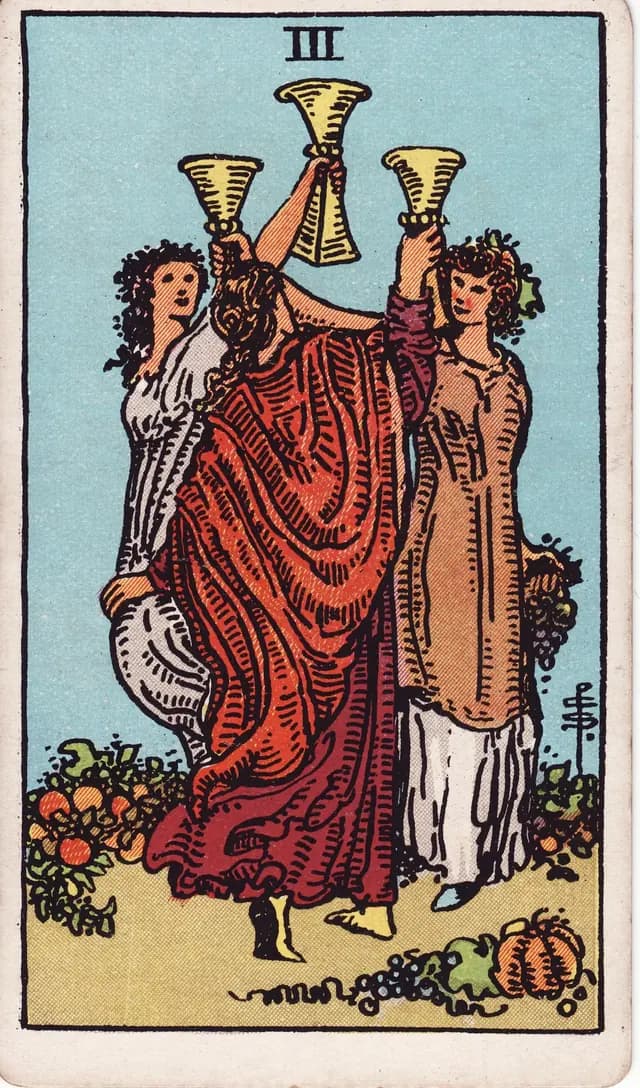
What Three of Cups yes or no means
Upright: Yes, because your shared joy has willing support around it.
Reversed: Maybe, because your group needs to clear the tension first.
The Three of Cups upright receives Yes in Naksham's current map, favoring shared enjoyment and willing social support. Apply the answer to a gathering or cooperative step that the people involved actually want to join. A practical condition is making participation comfortable rather than assuming enthusiasm means everyone has the same resources. The raised cups invite you to consider shared celebration through the practical ways people are included.
Reversed, the classification is Maybe because social tension or excess can make the same invitation less comfortable. Ask whether your proposed plan respects different limits and leaves room to discuss a concern before celebrating together. A smaller gathering or clearer boundary can improve the choice without guaranteeing that every participant will agree. Both orientations concern your circle, with reversal asking whether its welcome makes room for everyone's different social needs.
Explore Three of Cups with your own draw
Your draw can reveal any card in the deck.
In love
For love, upright Yes supports shared time that both people enjoy within a welcoming social setting. Ask whether your partner wants the same kind of occasion before treating a group plan as automatically romantic. Reversed Maybe calls attention to outside pressure or private details becoming material for the wider circle's conversation. Keep important relationship decisions between the people involved, while letting friends offer support without deciding the next step.
At work
At work, upright Yes fits celebrating a result or joining a collaboration whose participants can contribute willingly. Check whether your team has time for the proposed event and whether recognition reaches the less visible contributors. Reversed Maybe asks whether a social plan hides unresolved tension or makes belonging depend on attendance. Address those concerns directly before expecting a cheerful gathering to repair the strain in a working relationship.
Your next step
Write the invitation as one concrete choice and name what would make participation enjoyable for you. Check the cost, timing, and people involved before using a favorable card as the whole basis for accepting. Consider upright Yes when the plan offers shared pleasure without crowding anyone's boundaries or creating an unspoken obligation. With reversed Maybe, name the tension and consider whether changing the arrangement would make this gathering more welcome.
- upright yes
- reversed maybe
- willing participation
- shared enjoyment
The image behind this reading
Notice the orange pumpkin near the lower right corner as you look around the dancers' feet.[1]
Read these meanings as modern interpretations of the imagery in your 1909 Rider-Waite-Smith deck.