
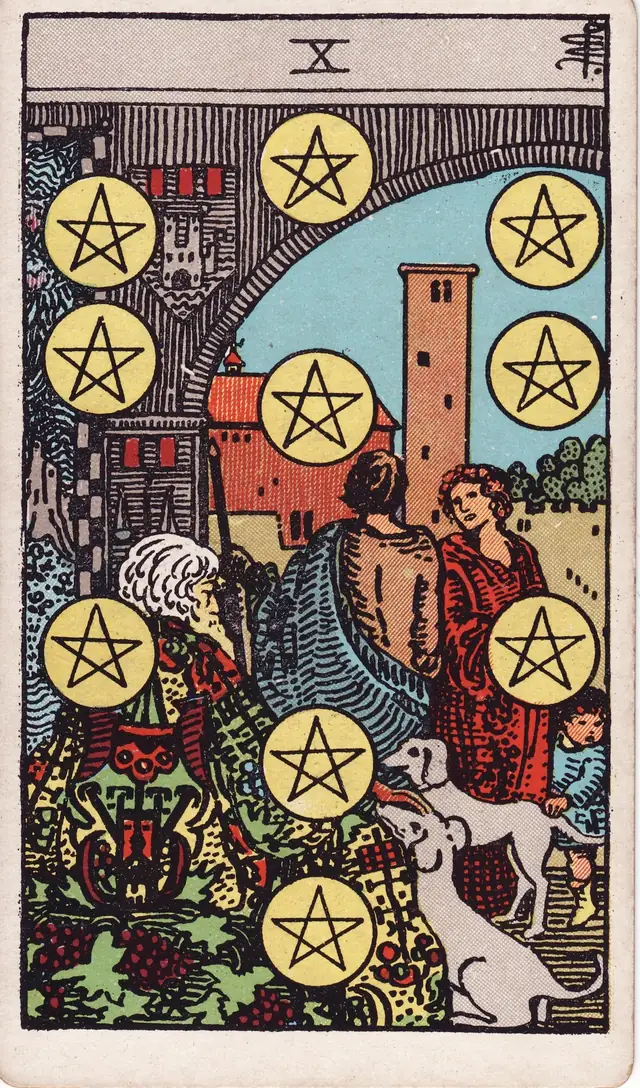
What Ten of Pentacles yes or no means
Upright: Yes, because your shared foundation supports a lasting next step.
Reversed: Leaning no, because your shared foundation needs repair before expansion.
Upright, the Ten of Pentacles receives Yes in Naksham's current map of card answers. The favorable reading rests on shared support, established resources, and a structure that can hold more than today. Check that your proposed step fits the responsibilities and needs of the people who maintain that structure. This answer supports a grounded longer view while keeping continued care part of what makes shared support dependable.
Reversed, the answer becomes Leaning no because strain within the foundation makes further commitment less well supported. Unclear responsibilities or family disagreement can weaken what your decision needs to rely on. Name the existing problem and assess it before adding another demand to the same shared arrangement. These classifications distinguish dependable support from needed repair without predicting the future of the family or organization involved.
Explore Ten of Pentacles with your own draw
Your draw can reveal any card in the deck.
In love
For a question about a shared next step, upright Yes supports considering the life you would actually build. Discuss household habits, wider relationships, and the responsibilities that come with the proposed change. Reversed Leaning no asks whether family pressure or unresolved duties would make that step difficult to sustain. Neither label supplies consent, so mutual agreement remains necessary before treating the family scene as a shared plan.
At work
A work decision fits the Ten when its success relies on a dependable structure beyond one person's effort. Upright Yes supports your assessment of established support that can carry the task across time. Reversed Leaning no directs attention toward unresolved roles or internal disagreements that weaken that support. Check who maintains the process and how an absence is covered before relying on the structure's apparent readiness.
Your next step
Write your question around one step that would add responsibility to an existing shared arrangement. List the people and routines the step depends on, then check whether their support is actually available. Let upright Yes encourage a considered extension of a foundation that works in ordinary life. If reversed, address the weak agreement before asking a larger commitment to bring the people involved closer together.
- upright yes
- reversed repair
- shared foundation
- lasting condition
The image behind this reading
Your eye can trace the tower rising beyond the family gathered within the stone arch.[1]
Read these meanings as modern interpretations of the imagery in your 1909 Rider-Waite-Smith deck.