
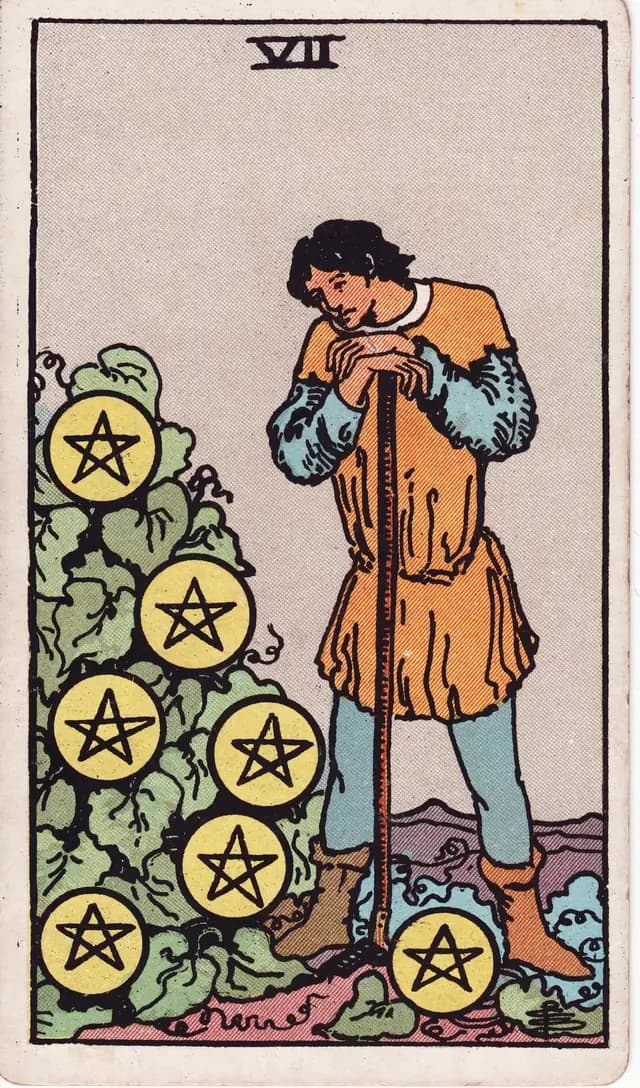
What Seven of Pentacles in love means
In love, the Seven of Pentacles describes a pause to look at what your effort has grown. The gardener leans on his tool and studies the coins, neither giving up nor rushing ahead. That stance suits a relationship that has received steady care and now deserves an honest review. Checking in this way shows commitment to growth, not doubt about the person beside you.
A couple might notice this card after a year of building routines, savings, or a shared home. Asking whether both partners are still growing in the same direction is a healthy, caring question. Keep the conversation curious, and avoid turning it into a score of who gave more. What grows slowly often needs one more season before its full shape becomes clear to you.
In love
Partners can use this card to review what is thriving between them and what needs fresh attention. Share one thing your bond does well, then name one area where you want more care. Singles might reflect on past relationships to see which habits brought lasting warmth and which did not. Reconnecting with an old flame is not promised here, only clearer sight of your own patterns.
At work
At work, the Seven of Pentacles fits a quarterly review or a pause before the next investment. Measure what your hours on a project have actually produced against what you first expected. Share your findings with a manager so decisions rest on real numbers instead of hopeful guesses. A slow return can still be a good one, especially when the groundwork is solid.
Your next step
Set aside a quiet evening to think about how much you have invested in love lately. List the gestures that brought you closer and the ones that seemed to go unnoticed. Bring one observation to your partner as a question, keeping your tone warm and open. Patience fits this card, so give any change a few weeks before judging whether it worked.
- taking stock
- patient love
- honest review
- slow growth
The image behind this reading
Your gaze follows the gardener's to the green vine, where seven coins hang among the leaves.[1]
Read these meanings as modern interpretations of the imagery in your 1909 Rider-Waite-Smith deck.