
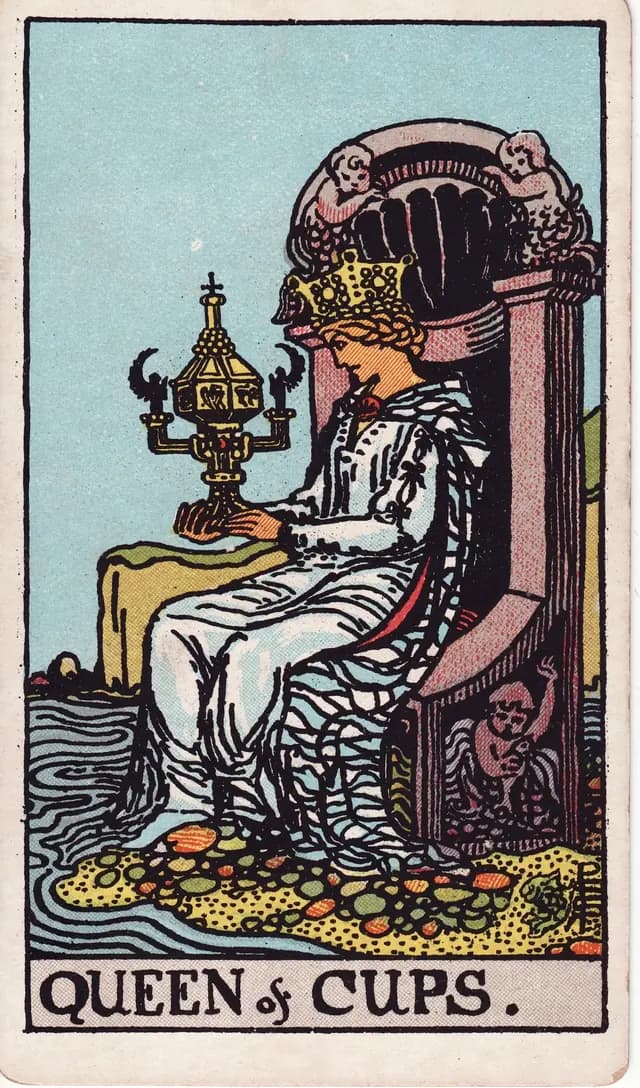
What Queen of Cups as intentions means
The Queen of Cups as intentions suggests understanding a feeling before choosing a considered response. Someone offers time, a private conversation, or support shaped around what you actually want to share. Ask what they can provide and whether the proposed care matches your own preference for the exchange. The held cup frames considered attention, while an actual plan includes listening and respecting the answer received.
A friend asks whether you want company while completing an errand that carries a difficult personal association. They offer a specific afternoon and leave room for you to prefer going alone or choosing someone else. Decide what would help rather than accepting because the offer sounds especially kind or thoughtful. A practical care plan follows the recipient's expressed need instead of the role the helper has assumed.
Explore Queen of Cups with your own draw
Your draw can reveal any card in the deck.
In love
In love, this card frames a possible intention to make room for a more personal conversation. Ask whether your partner wants listening, a shared decision, or discussion of a specific concern between you. State how much time you can offer and choose a setting that permits both people to speak freely. An agreed conversation gives this caring plan substance when its terms leave room for different emotional experiences.
At work
At work, the possible plan is to understand how a decision affects people before choosing its final form. Ask which feedback will shape your team's next step and who will be responsible for responding to it. A listening session needs a clear purpose so personal disclosure does not become another demand without practical benefit. The Queen's intention becomes useful when the care shown in conversation informs a specific, workable adjustment afterward.
Your next step
Clarify the proposed help before accepting, including what is offered and what the giver expects in return. Say which part you welcome and which part would feel intrusive or unnecessary in the current situation. Notice whether the person adapts the offer without making your preference a problem they need to overcome. The Queen's thoughtful intention appears through that flexibility, allowing care to remain chosen by both people involved.
- considered support
- listening offer
- responsive plan
- chosen care
The image behind this reading
You can see the carved figures on the throne above the crown and beside the seat.[1]
Read these meanings as modern interpretations of the imagery in your 1909 Rider-Waite-Smith deck.