
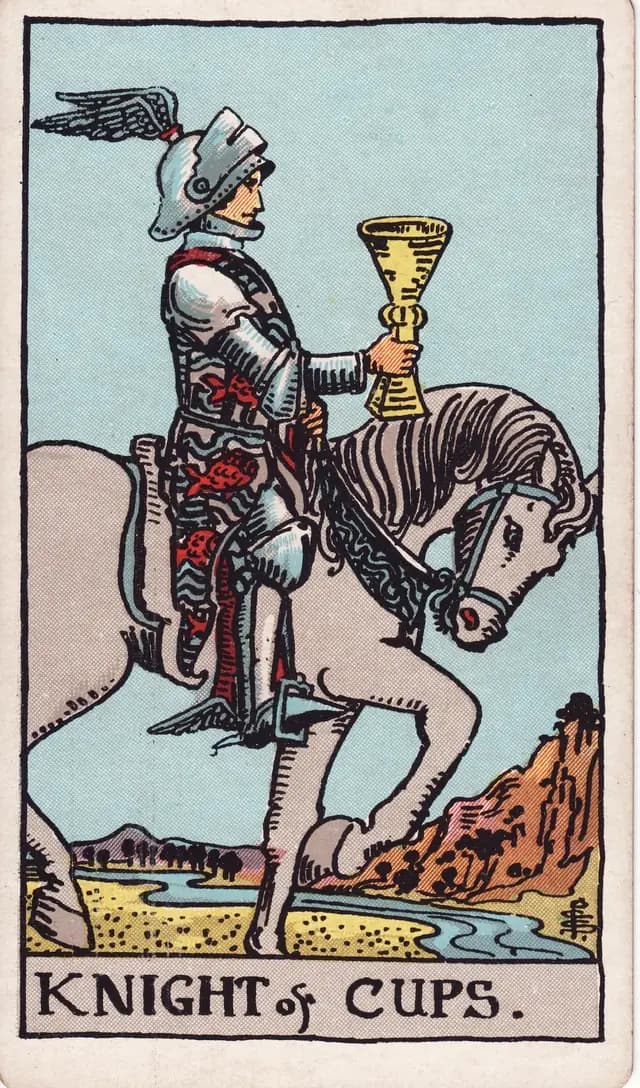
What Knight of Cups yes or no means
Upright: Maybe, because your heartfelt offer needs clear follow through.
Reversed: Leaning no, because your offer still lacks the promised action.
The Knight of Cups upright receives Maybe in Naksham's current map, reflecting an offer needing follow through. Apply the answer to a proposal whose appeal you can compare with the actual action being offered. A practical condition is knowing who will take the next step and when it can happen. The rider's cup frames meaningful interest, while dependable delivery remains a question that the invitation itself cannot settle.
Reversed, the answer is Leaning no because charm can remain visible while the promised action stays absent. Ask whether your proposed commitment depends on behavior that has repeatedly failed to arrive when agreed. Request a concrete step before adding further time or expectations to the same unfinished offer. These orientations compare promise with unreliable delivery without determining another person's motives or guaranteeing the proposal's outcome.
Explore Knight of Cups with your own draw
Your draw can reveal any card in the deck.
In love
For love, upright Maybe invites you to enjoy an approach while clarifying the contact both people want. Check that a proposed date receives a real arrangement before assuming romance already means shared commitment. Reversed Leaning no highlights promises whose lack of action has become a repeated part of the connection. Let the actual pattern guide your involvement rather than allowing each new declaration to erase what happened before.
At work
At work, upright Maybe suits an appealing creative proposal whose practical demands still need careful discussion. Ask for a sample or clear outline before deciding how much of your team's time to commit. Reversed Leaning no asks whether the pitch repeatedly becomes more elaborate while its first deliverable remains unfinished. A limited trial can provide information without making emotional appeal the basis for another broad professional promise.
Your next step
Write the offer as an action with a person responsible and a realistic point for review. Ask whether your evidence includes completed steps or only the pleasure of hearing the proposal described. Use upright Maybe to clarify what a promising invitation would need before a larger commitment feels sensible. With reversed Leaning no, keep involvement within the promises already honored instead of relying on another convincing explanation.
- upright maybe
- reversed leaning no
- tested proposal
- dependable delivery
The image behind this reading
Notice the red fish on the rider's tunic as you look between the armor and the reins.[1]
Read these meanings as modern interpretations of the imagery in your 1909 Rider-Waite-Smith deck.