
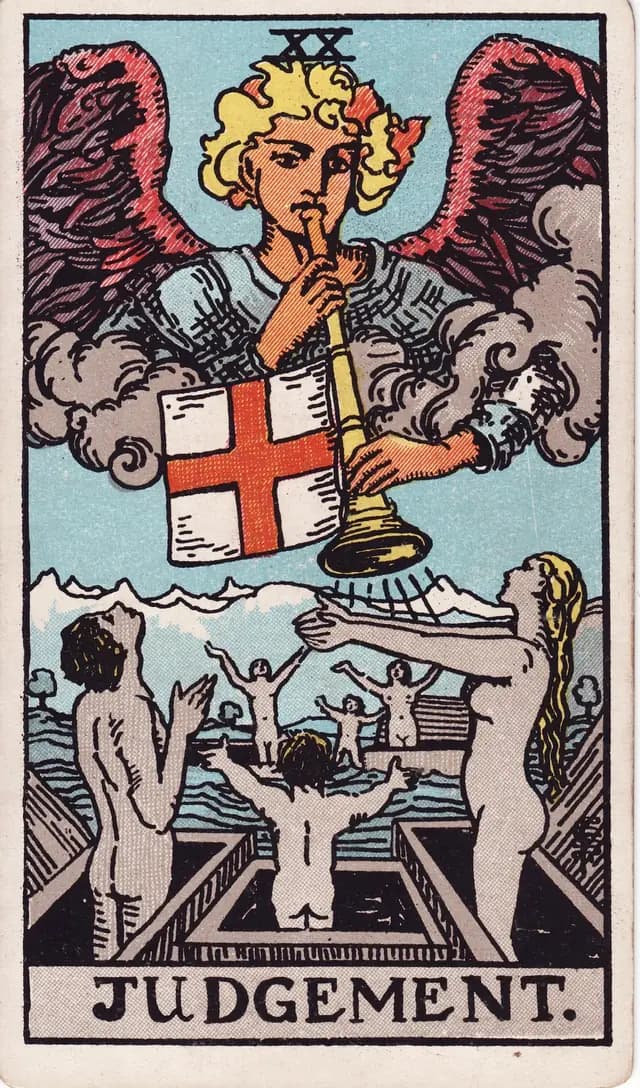
What Judgement yes or no means
Upright: Yes, because you can answer this call with clear purpose.
Reversed: Leaning no, because your past still needs an honest review.
Judgement upright receives Yes in Naksham's current map, favoring a considered response after honest review. Apply the answer to an action you can take with the lessons of experience in view. The trumpet gives the reading its image of a call met by a visible response. A useful condition is knowing what this choice changes and accepting responsibility for your part.
Reversed, the live label is Leaning no because an unfinished review still affects readiness to act. Consider a request to restart something before the earlier problem has been openly acknowledged. Ask which lesson your proposed response includes and how the next arrangement would differ. This orientation favors addressing avoidance first, while the upright reading supports answering with clearer purpose.
Explore Judgement with your own draw
Your draw can reveal any card in the deck.
In love
For love questions, upright Yes supports a welcome, honest conversation about the relationship's next chapter. Confirm that your companion is willing to talk before choosing the time or subject. Reversed Leaning no asks whether old blame or an unresolved ending still shapes the request. Neither label decides another person's response, so any shared step needs their separate and willing agreement.
At work
For work, the upright answer suits responding to a role that fits lessons from earlier experience. Check the actual duties before treating a sense of purpose as enough information to accept. Reversed Leaning no calls attention to a review, correction, or conversation being put off. Resolve that matter before committing your name to a fresh version of the same arrangement.
Your next step
Frame your question around a response, such as accepting a review or proposing a corrected approach. Write the lesson from the past that the next action needs to take into account. Use upright Yes as encouragement to answer once the practical terms are clear enough. With the reversal, address the avoided matter and decide again from the information that becomes available.
- upright yes
- reversed hesitation
- clear purpose
- honest review
The image behind this reading
You can trace the red cross on the white banner hanging from the trumpet.[1]
Read these meanings as modern interpretations of the imagery in your 1909 Rider-Waite-Smith deck.