
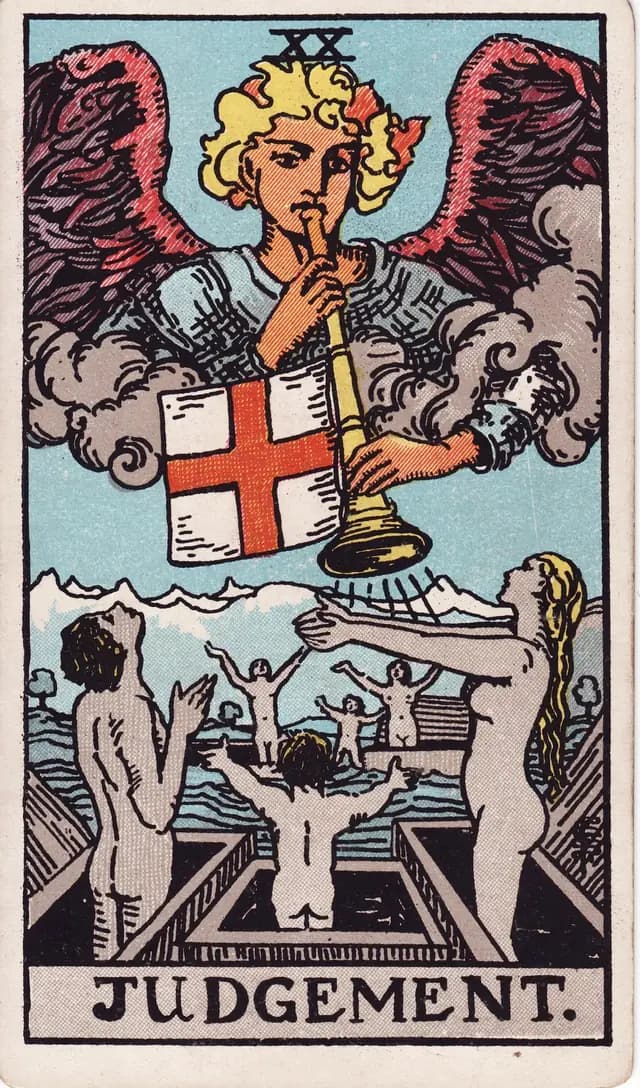
What Judgement reversed means
Judgement reversed describes a needed response held back by harsh thoughts about your past. The call still matters, but self-blame makes answering feel like claiming something beyond reach. Separate the mistake that needs repair from the belief that every future choice is spoiled. A fair review names what happened, then gives the next action a clear purpose.
An invitation to return to something meaningful sits unanswered because an earlier attempt ended badly. Read the actual request before deciding that your previous result makes another attempt pointless. Identify what has changed in your skills, support, or reasons for wanting this opportunity. Answer at the size offered, without promising to redeem an entire history through one decision.
Explore Judgement with your own draw
Your draw can reveal any card in the deck.
In love
In love, this reversal brings attention to an old conversation that still shapes present contact. Notice where your reply answers a former hurt instead of what was actually said. Name the unfinished issue in plain words and ask whether both people want to discuss it. Forgiveness can change how you carry the past without requiring another relationship with that person.
At work
At work, Judgement reversed can describe avoiding a review because criticism feels like a final sentence. Gather your recent work before the meeting so specific examples keep the discussion grounded. Ask which change matters most, then agree on a task that demonstrates the adjustment. A difficult assessment deserves attention without becoming a fixed account of everything you can offer.
Your next step
Choose one unanswered matter and write the response you have been putting off giving. Remove claims about being hopeless, keeping the facts and any repair still within reach. Decide whether the next step is an apology, a correction, or a clear refusal. Set a time for that action so reflection serves a response instead of prolonging the silence.
- avoided review
- self-doubt
- unfinished apology
- inward call
The image behind this reading
Look at the long trumpet above the figures as you trace its downward angle.[1]
Read these meanings as modern interpretations of the imagery in your 1909 Rider-Waite-Smith deck.