NakshamNAKSHAM
Tarot
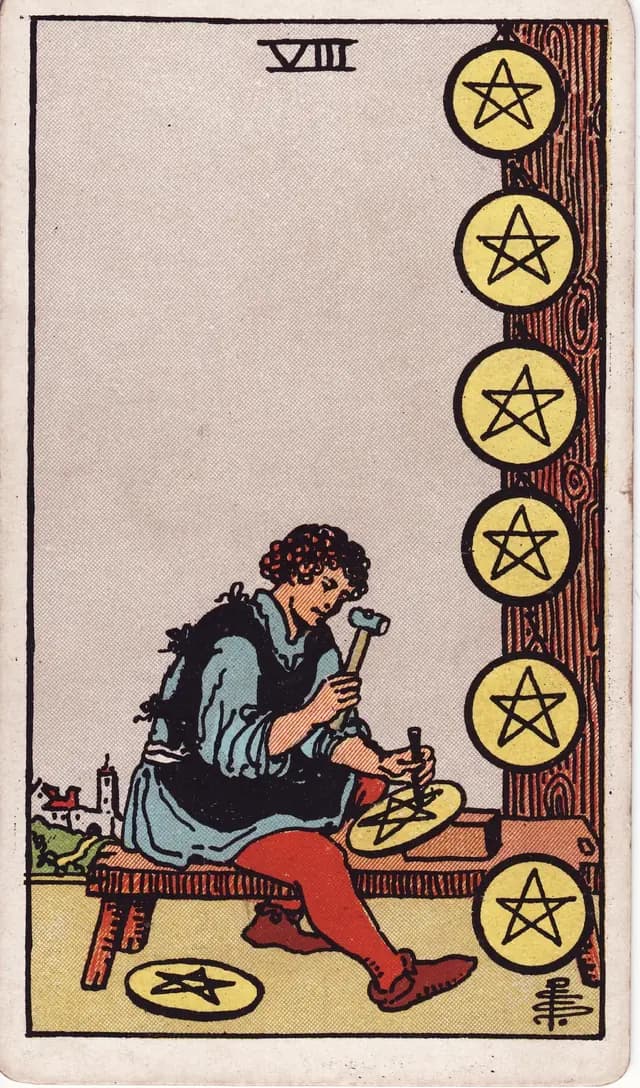
Eight of Pentacles in the Rider-Waite-Smith deck, reversed

Eight of Pentacles Reversed

Reversed

What Eight of Pentacles reversed means

The Eight of Pentacles reversed suggests effort that has become rushed, repetitive, or trapped by perfection. Hours can accumulate while your attention drifts away from what the work should teach. The growth area is restoring useful practice, rather than demanding more output from the same tired routine. Examine the quality of one recent piece and identify where focused care would make a difference.

A familiar task can become harder to finish when every small flaw invites another unnecessary revision. Elsewhere, boredom can lead you to skip the very checks that keep the result dependable. Both patterns interrupt the maker's steady learning, though they call for different changes in approach. Set a clear finish standard and compare your process with that standard before adding more hours.

Explore Eight of Pentacles with your own draw

Your draw can reveal any card in the deck.

Get your own yes or no answer

Explore your question in a love reading

In love

In love, this reversal highlights care that has become mechanical or crowded out by other work. Completing chores helps, but your partner can still miss shared attention and genuine warmth. Ask which routine feels empty and choose one way to make that time more present. The reversed craftsperson invites renewed care in the bond, without turning affection into another task requiring perfect performance.

At work

At work, repeated corrections can signal that your practice no longer targets the actual skill gap. Choose one recurring error and ask a skilled colleague to watch how you approach it. Their specific feedback can reveal more than another evening spent repeating the whole assignment. The reversed Eight directs effort toward useful learning, where specific feedback can improve the next attempt.

Your next step

Take one task off automatic repeat and describe what doing it well would actually mean. Compare your current method with that description, marking the point where attention starts to fade. Change one part of the practice and review the next finished piece against the same standard. This gives the reversed Eight a concrete response, whether the problem involves rushing, boredom, or endless revision.

  • stalled practice
  • lost purpose
  • rushed detail
  • perfection trap

The image behind this reading

You see the worker’s raised hammer above the coin being worked on the wooden bench.[1]

Read these meanings as modern interpretations of the imagery in your 1909 Rider-Waite-Smith deck.

Show source

This line sums up your reading of this card.

These meanings are modern readings of the card art.

Frequently Asked Questions

Is Eight of Pentacles reversed a yes or no?+
Leaning no, because your work needs more care and practice. Naksham's reversed classification focuses on weak preparation or rushed detail that leaves the task short of readiness. Check the exact skill or quality issue before adding another promise to your current workload. A focused practice plan gives you something useful to assess without guaranteeing the desired result.
Does this card mean you lack the needed talent?+
The reversed Eight examines how practice is working, rather than measuring your permanent ability. A poorly chosen exercise can leave an able learner repeating mistakes without understanding their cause. Ask for an example, try the task slowly, and compare the result with clear feedback. This reading directs attention toward a learning process that can change with better guidance and practice.
How can you tell perfectionism from useful attention?+
Useful attention improves a result against a standard that matters for the task's purpose. Endless revision keeps moving that standard after your work has already met the agreed need. Decide what finished means before beginning, then ask someone relevant to review the result. The reversed Eight invites care with a stopping point, so precision helps the work reach completion.
What if the work feels dull despite regular practice?+
Dullness can signal that the exercise no longer asks you to learn anything different. Compare recent attempts and identify whether a specific skill has improved or simply become familiar. Add one appropriate challenge or seek feedback on a detail that still needs attention. The reversed Eight suggests refreshing the learning purpose before deciding whether to leave the craft behind.
Is Eight of Pentacles reversed a bad card?+
No tarot card is bad in itself. Eight of Pentacles reversed shows the shadow side of the card, offered as guidance rather than a verdict. Reversed, it suggests: The joy has slipped out of your work. Maybe you cut corners, get stuck on being perfect, or just go through the motions. This card asks you to find the purpose that makes the effort worth it. Read it as a prompt to reflect, not a cause for alarm.

Related Pages

Sources & References

  1. [1]Pamela Colman Smith and A. E. Waite, Rider-Waite-Smith tarot deck (1909)