
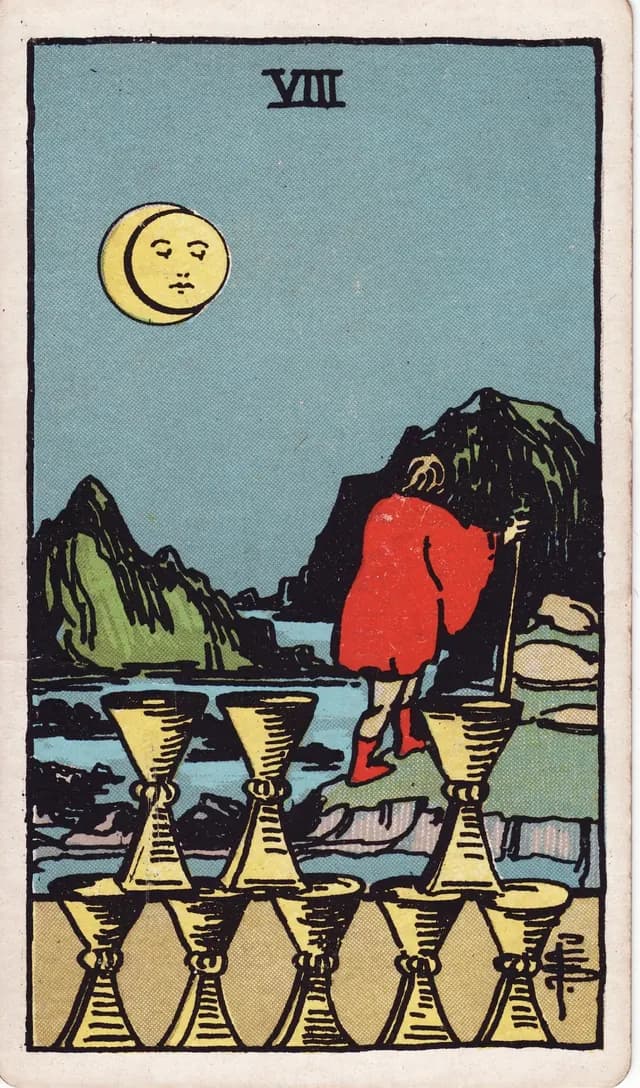
What Eight of Cups yes or no means
Upright: Leaning no, because this choice leaves your deeper need unmet.
Reversed: Maybe, because your reasons to stay or leave need clarity.
The Eight of Cups upright receives Leaning no in Naksham's current map because the available arrangement feels unfulfilling. Apply the answer to a proposed continuation that leaves your important need outside the terms being offered. Ask what would make participation meaningful before accepting mainly because considerable effort has already been invested. The departing figure frames a limit, without deciding that every difficult commitment should immediately be abandoned.
Reversed, the answer is Maybe because reasons for staying or leaving have not reached a clear decision. Check whether your hesitation concerns a practical constraint, uncertain information, or attachment to the familiar routine. A useful condition is naming what you need to learn before choosing the next step. The orientations distinguish a recognized gap from unresolved hesitation, without promising what another path would provide.
Explore Eight of Cups with your own draw
Your draw can reveal any card in the deck.
In love
For love, upright Leaning no asks whether the proposed step deepens an arrangement that leaves your needs unspoken. Discuss the gap directly before assuming another commitment will make the existing distance disappear on its own. Reversed Maybe leaves room to examine hesitation and whether both people want to address what feels missing. Present consent and clear information matter because neither orientation promises fulfillment through staying or through leaving.
At work
At work, upright Leaning no highlights a role or project that offers little of the meaning you seek. Identify the missing part before accepting additional responsibility merely because the work is familiar and already available. Reversed Maybe asks what practical information would help you judge a change instead of repeatedly postponing the question. Compare actual options and obligations so the reading informs reflection while leaving the work decision with you.
Your next step
Phrase the question around one proposal rather than asking the card to settle your entire future. Name the need the proposal would meet and the important need it would still leave outside. Use upright Leaning no to examine that gap before agreeing to more of the same arrangement. With reversed Maybe, choose a focused inquiry and arrange a time to review what you learn.
- upright leaning no
- reversed maybe
- unfulfilled choice
- unresolved direction
The image behind this reading
Notice the gap between the upper cups as you look beneath the figure leaving the foreground.[1]
Read these meanings as modern interpretations of the imagery in your 1909 Rider-Waite-Smith deck.