
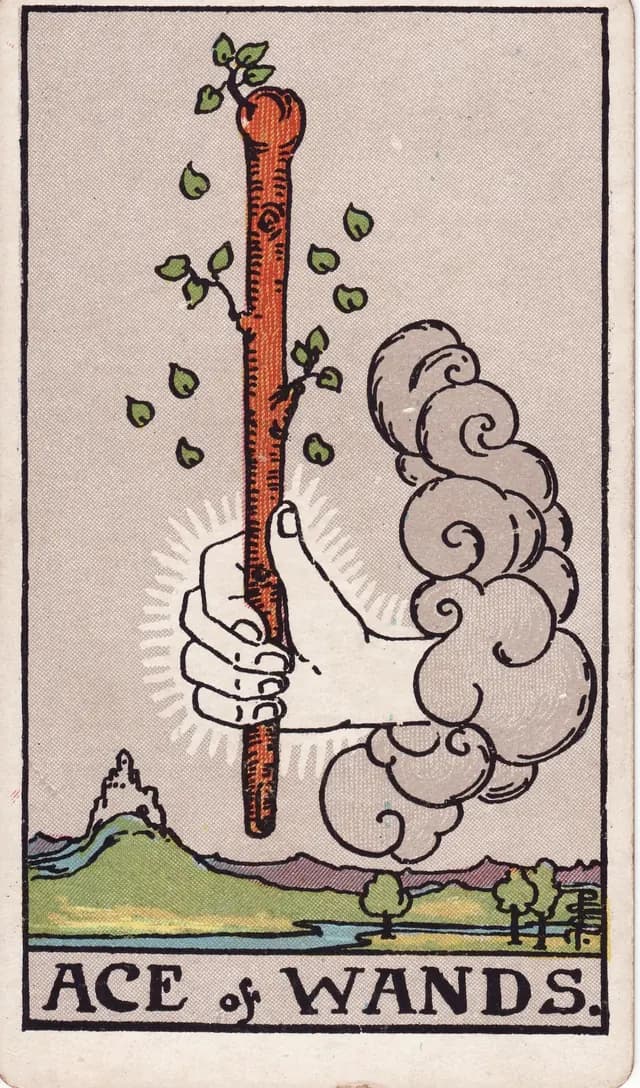
What Ace of Wands yes or no means
Upright: Yes, because you can give this fresh idea a start.
Reversed: Maybe, because your spark needs space before it can grow.
The Ace of Wands upright receives Yes in Naksham's current map, favoring a fresh creative beginning. Use that answer for a first action you can choose, such as making a rough example. The hand holding a living wand gives the reading its image of energy offered for use. A practical condition is keeping the start small enough that learning does not require an oversized commitment.
Reversed, the live answer is Maybe because the spark needs attention before a stronger beginning becomes clear. Examine whether your interest has room to develop or is being crowded out by pressure. A short private attempt can show what feels engaging without demanding that the whole project succeed. The upright answer encourages starting, while the reversal asks what helps the initial energy take shape.
Explore Ace of Wands with your own draw
Your draw can reveal any card in the deck.
In love
For love, upright Yes supports expressing interest through a clear invitation that the other person can freely answer. Check your own willingness and respect their pace before turning excitement into a shared arrangement. Reversed Maybe points toward uncertain timing or a spark that needs a more comfortable setting. Neither answer proves mutual attraction, so a direct response remains essential before planning further contact together.
At work
At work, upright Yes suits beginning a promising idea through a rough and useful demonstration. Check that your first attempt fits the available time and any permission the task requires. Reversed Maybe asks whether the idea lacks attention, a starting point, or interest from the people involved. Resolve that gap with a small trial before requesting the resources needed for a larger version.
Your next step
Ask whether to try one specific creative action rather than whether an entire venture will succeed. Define your first attempt and what it can teach within the time you have available. For upright Yes, begin that version and collect feedback before expanding the commitment any further. For reversed Maybe, remove one source of pressure and test whether the spark still draws your attention.
- upright yes
- reversed maybe
- creative start
- small trial
The image behind this reading
You can see a small castle on the distant hill beneath the hand holding the wand.[1]
Read these meanings as modern interpretations of the imagery in your 1909 Rider-Waite-Smith deck.