
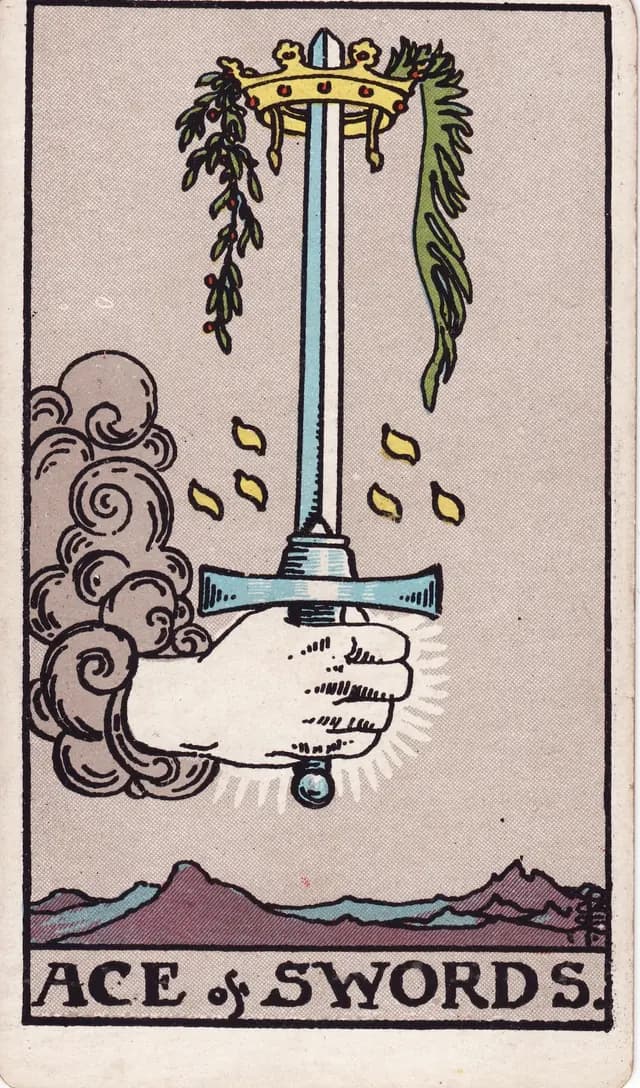
What Ace of Swords as feelings means
The Ace of Swords as feelings suggests you want an honest exchange that makes sense. Emotional interest takes a thoughtful form here, with questions, direct language, and attention to meaning. A conversation can feel close because neither person has to guess what the other meant. Read that clarity as a theme to explore, without assuming it proves romantic attachment.
Someone who asks a precise question may be trying to understand you more fully. Look for whether they listen to the answer and remember it during later conversations. Intellectual excitement matters, but a sharp exchange alone does not establish care or commitment. The useful emotional sign is truth offered with consideration for the person receiving it.
Explore Ace of Swords with your own draw
Your draw can reveal any card in the deck.
In love
A bond can deepen when you name a need that has stayed frustratingly vague. Explain what closeness looks like in practice, such as regular plans or more direct answers. Invite your partner to describe their own needs without correcting the language they choose. The Ace favors understanding that both people can use, rather than a perfect speech.
At work
Feeling understood at work can begin with someone taking your reasoning seriously during discussion. Notice who asks about the idea itself instead of praising only its confident delivery. A clear exchange supports trust when questions remain respectful and credit goes where it belongs. Keep workplace interest within its actual setting unless someone openly names a different connection.
Your next step
Choose one feeling you have been explaining indirectly, then name its immediate cause plainly. Share the observation and the feeling without telling another person what they secretly meant. Leave a pause for their response, even when a quick answer would feel reassuring. This gives the Ace its emotional use, turning mental clarity into a fair conversation.
What the Ace of Swords Suggests About Your Clear Impression
The Ace of Swords suggests you come across to someone as a speaker of welcome clarity. The raised blade hints that your honesty feels like fresh air when talks turn foggy. To them, you might seem easy to understand because you rarely leave hints hanging. Treat this as a reading of possible impressions, then check it against what they actually say.
- honest feelings
- mental connection
- clear talk
- fresh understanding
The image behind this reading
You see a hand grip the sword hilt beneath six golden shapes in the open sky.[1]
Read these meanings as modern interpretations of the imagery in your 1909 Rider-Waite-Smith deck.