
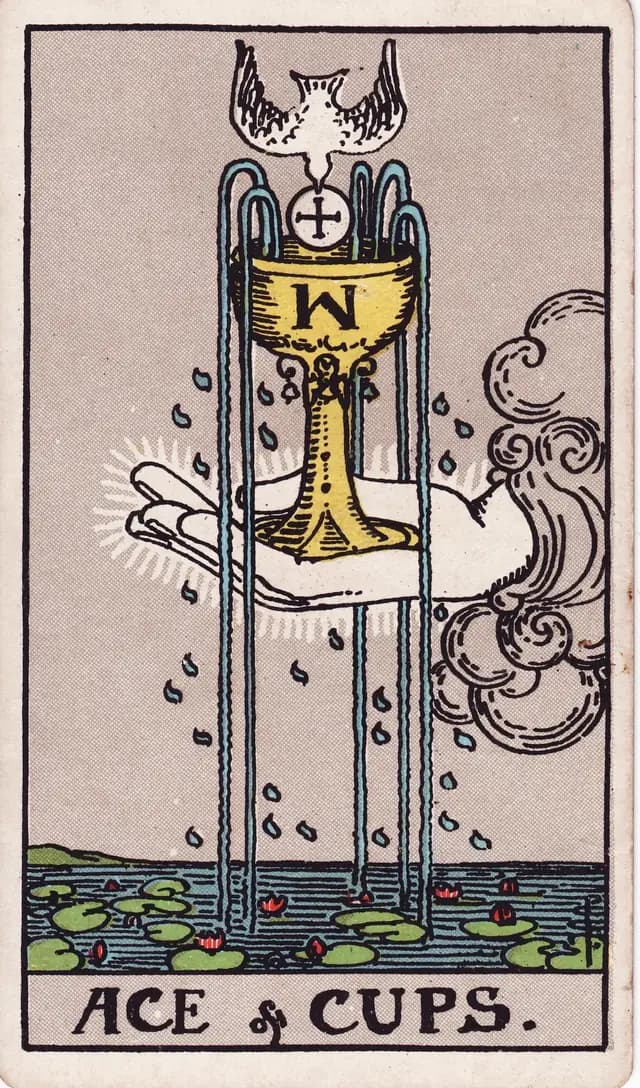
What Ace of Cups yes or no means
Upright: Yes, because your open heart gives this start room.
Reversed: Maybe, because your feelings need room before this choice.
The Ace of Cups upright receives Yes in Naksham's current map, favoring a fresh and welcome emotional opening. Apply the answer to an invitation or creative beginning that you genuinely want to explore. A practical condition is having room to receive the experience without demanding an immediate lasting result. The overflowing cup frames emotional availability, with later choices determining what actually grows from this first opening.
Reversed, the live classification is Maybe because feelings can remain blocked or difficult to express. Ask whether your next step would allow an honest response or require closeness you cannot presently offer. A smaller invitation can make the practical choice clearer while the reversed card's classification stays unchanged. Both orientations concern emotional room, with the reversal asking what needs attention before another commitment draws on it.
Explore Ace of Cups with your own draw
Your draw can reveal any card in the deck.
In love
For love, upright Yes supports a gentle invitation when your interest leaves room for another person's free answer. Share what you would enjoy while asking about the other person's hopes instead of assuming a shared future. Reversed Maybe asks whether guarded feelings or an unwelcome pace make the proposed step difficult to receive. Let the actual conversation determine mutual interest, since neither classification can supply consent or confirm private affection.
At work
At work, upright Yes fits exploring a creative task that connects with your interests and available energy. Check the time and support required before turning an appealing idea into a broad ongoing responsibility. Reversed Maybe asks whether the proposed project arrives while your attention already feels stretched or emotionally empty. Consider a limited trial whose scope respects those facts instead of expecting enthusiasm to solve every practical constraint.
Your next step
Frame the question around one opening you can choose, such as sharing an idea or accepting a conversation. Name what feels welcome and what expectation would make the same invitation too demanding right now. Use upright Yes to examine a beginning that gives genuine interest room without forcing its final shape. With reversed Maybe, identify the emotional limit first and choose whether a smaller step would respect it better.
- upright yes
- reversed maybe
- welcome beginning
- emotional room
The image behind this reading
Notice the small water drops around the cup as you look between the long falling streams.[1]
Read these meanings as modern interpretations of the imagery in your 1909 Rider-Waite-Smith deck.